

When the World Split in Two ✧ Book 7
In defense of melancholia, and the richness of a life felt all the way through.

As always, here is some ambience made by yours truly to listen to and enjoy while you read. 🕯️👇🏼
✧
After my father died when I was 13, and my world split in two, I learned that there were emotions that were acceptable, and emotions that were not acceptable. Or, rather, that there was only one acceptable emotion: happiness. If any other color of the rainbow surfaced, whether it was blue or red or black, it was not welcome.
But even more than emotions like sadness, anger, and fear not being welcome, they were also, as I came to learn, an intolerable inconvenience.
No one wants to be around someone who is sad, Kate. You should be grateful. Be happy, and get over it.
While I believe that cultivating an “attitude of gratitude” is important to living a richer, more in tact life, and that the magic of gratitude is real, I do not believe that sadness is shameful or ugly.
The ancients celebrated sadness. They called it melancholia, and it had no interest in being fixed or managed or “cured.”
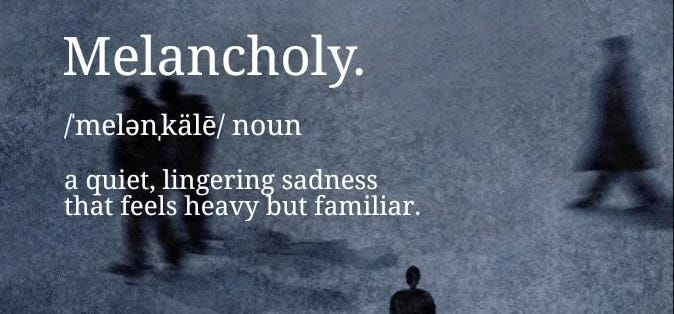
It isn't the sadness of crisis, or loss, or despair. It's quieter than that. More permanent. It's the feeling that arrives when you feel joy when you look at a rose but understand, in the same breath, that it will die. It's the awareness of beauty and impermanence held simultaneously—not as a problem to be solved, but as the very texture of being alive.
And before our time, melancholia was considered a gift.
“There is life, and there is death, and there are beauty and melancholy between.”
-Albert Camus
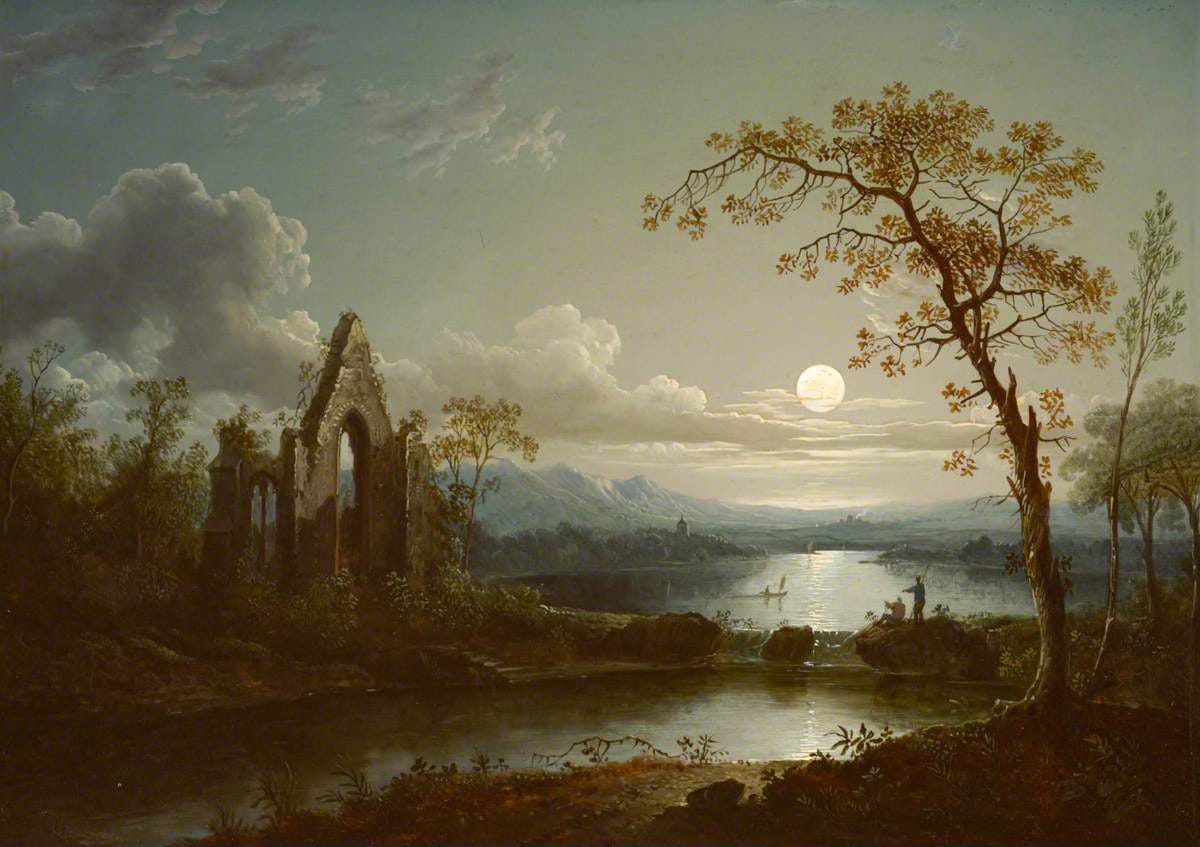
Before the Industrial Revolution, melancholia was coveted. The great philosophers, artists, and writers of their day didn’t just tolerate their darkness—they understood it as the source of their depth and art. The Romantics built entire aesthetics around it. Mary Shelley wrote from inside it. Keats called it dwelling in beauty precisely because beauty dies.
Wealthy landowners in the 1800s would hire actors—hermits, they called them—to live on their estates. Unkempt, contemplative, writing all day in small cabins erected specifically for the purpose. They built artificial ruins on their properties so that melancholy could have a place to live, a texture to inhabit. They understood that beauty and sadness needed architecture. It needed space.
Melancholy was fashionable. It was considered evidence of refinement, of depth, and genius.
And then…Henry Ford needed workers.
Ford hired Hugo Münsterberg (author of Psychology and Industrial Efficiency) to monitor factory workers. To assess their temperaments. To find ways of making people more machine-like, more consistent, more productive. The natural human rhythms—the contemplative days, the slow mornings, the grief that needed time, the melancholy that needed space or paintbrushes or a pen—became liabilities. Inconveniences. Things to be smoothed over in the name of output.
Being a full human being became, quietly and efficiently, a problem for profit.
All my joys to this are folly,
Naught so sweet as melancholy.
-Robert Burton
This is not ancient history. It is the water we swim in.
The world we inherited tells us that sadness is a symptom. That slowness is laziness. That the person lying under a tree reading a book instead of producing something is wasting their potential. That the writer who needs three days of absorption before a single sentence arrives is broken. That the artist who moves in waves—erupting with creation and then retreating into necessary silence—lacks discipline.
We have been taught to treat our own natural rhythms as defects.
But here is what I know from living inside this particular kind of mind:
Melancholy is not separate from beauty. It is the condition of beauty. The ache is not the opposite of the aliveness. It is the aliveness, felt at full depth. You cannot have the awareness of a rose without the awareness that it wilts. You cannot love something completely without knowing it is impermanent. The sadness and the wonder are the same sensation.
This is what the Romantics understood. What the hermits on their estates understood. What Henry Ford’s man systematically tried to eliminate.
We also saw the erasure of melancholy present in the airline boom in the 60s. Data was collected on the perfect way to smile. Companies measured whether a stewardess’s smile was conducive for profit, and suitable to sell a particular sheen of professionalism. Performative happiness became the norm. Pretend that all is well at all times. Be happy.
Life has never been the same since. And we feel it. We feel it deeply in our bones. And what so many of us are trying to reclaim is something we’ve nearly lost the language to explain, feel, or understand.
I see it everywhere now. People giving up social media to sit with friends and drink something warm. The sudden fashionability of earthy colors—greens, browns, the palette of things that grow and decay. The hunger for stories that feel mythological, ancient, gothic, true in a way that productivity culture cannot be. The longing for places that don’t exist yet, or don’t exist anymore, or exist only in the imagination—which is to say, exists most fully of all.
People don’t realize what they’re thirsting for. They just know the current world isn’t it.
They’re thirsting for permission to be slow. To be sad sometimes. To be full and complex and not optimized. To lie under a tree and call it enough. To feel the weight of something beautiful without immediately turning it into content.
They’re thirsting for melancholy. The real kind. The ancient kind. The kind that produces art and philosophy and the particular quality of presence that only comes from having sat with difficult things long enough to understand them.
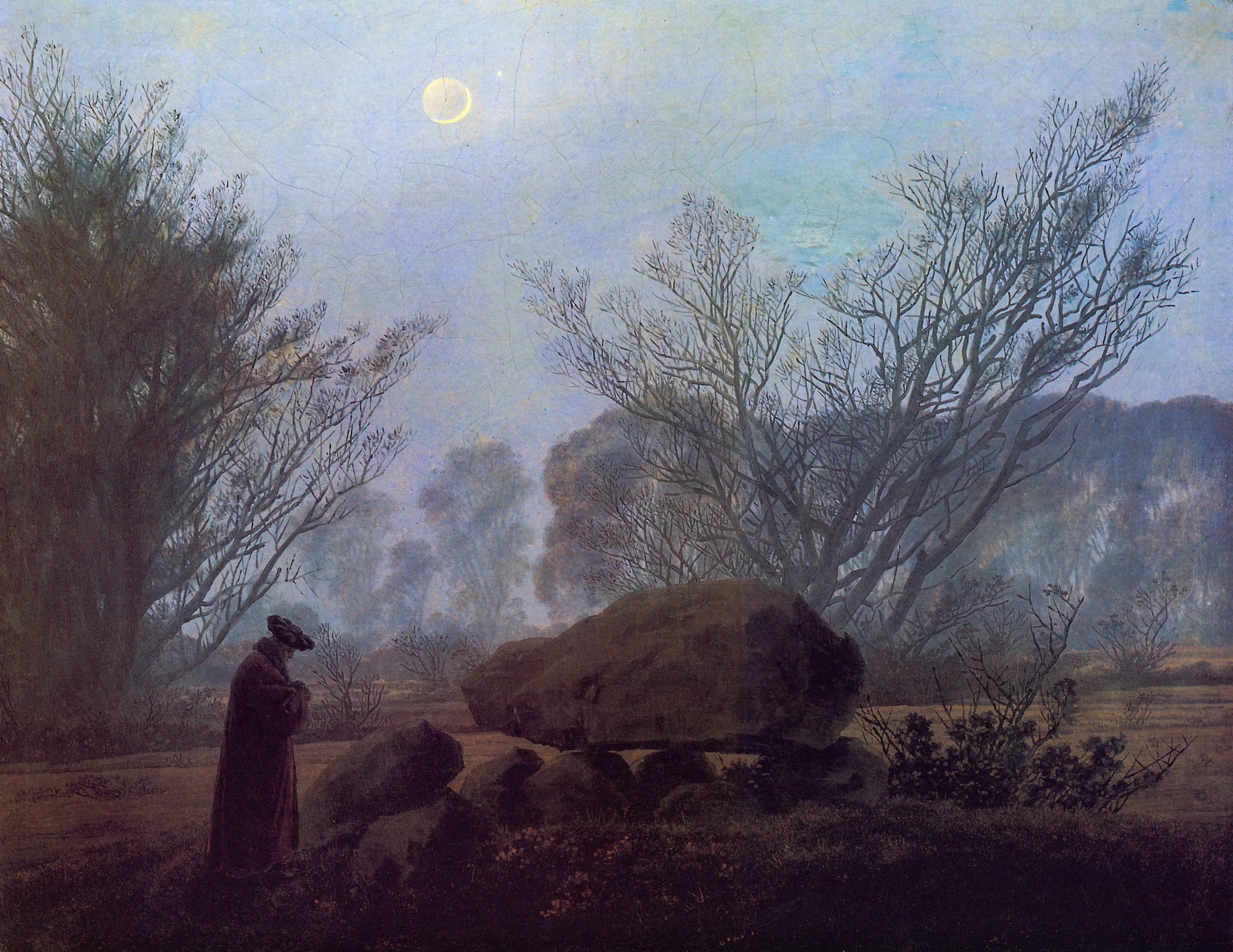
I am a melancholic person. I have been one my whole life, or at least since my father died—which happened earlier than I would have chosen.
For years I thought this was a flaw. Something to outrun, explain, medicate, or apologize for. Something that made me too much, too slow, too interior for the world as it is currently arranged.
I think differently now.
I see now that my sadness was never an inconvenience. It was never too much or shameful or something to be exiled. It gave my life richness and awareness—an interiority and ability to see the world differently. My father’s death may have split my world in two, but it created a new one. One that is alive with creativity and intelligence.
I see now that other people’s responses to my melancholy are nothing but a byproduct of the world we currently live in. It isn’t their fault.
I think melancholy is rich. It’s information. It is the awareness of impermanence taken seriously. It is the refusal to look away from the fact that things end, that people leave, that beauty is always also loss. It is, in its own way, a form of courage—the willingness to feel the full weight and lightness of being alive rather than skimming across the surface of it.
People hear the word melancholy and they think it equals a person who is incapable or devoid of the ability to feel happiness or joy. This is not true. If anything, melancholia makes the present moment, the ability to live within joy, that much more profound.
Being aware that things end makes the present moment more precious. What is currently alive and real and beautiful that much more rich.
“At the heart of all great art is an essential melancholy.”
-Federico Garcia Lorca
The world doesn’t need more surfaces. It needs more depth.
And depth, as it turns out, requires exactly the kind of mind that Henry Ford’s man would have flagged as inefficient.
So here is what I want to say, to you and to myself:
Your sadness is not a malfunction.
Your slowness is not laziness.
We are not machines, or products, or robots.
The days when you need to lie under a tree, or stare at the wall, or read something that breaks your heart a little—those are not wasted days. Those are the days the roots go deeper. Those are the days the work you haven’t written yet is being written underground, in the dark, in the slow language of feeling things all the way through.
Melancholy is not an enemy of a beautiful life. It is, in many ways, the source of it.
Give it a room. Give it some space. Let it be fashionable again.
Build it a garden, if you have to.
The roses will bloom there.
They always do.
-K 🌹
This is wonderful, you were right! I also love the paintings and artists you showed
This is my favorite thing you've written yet. Thank you